English| EUR
Suggested for you
More currencies
Choose a language
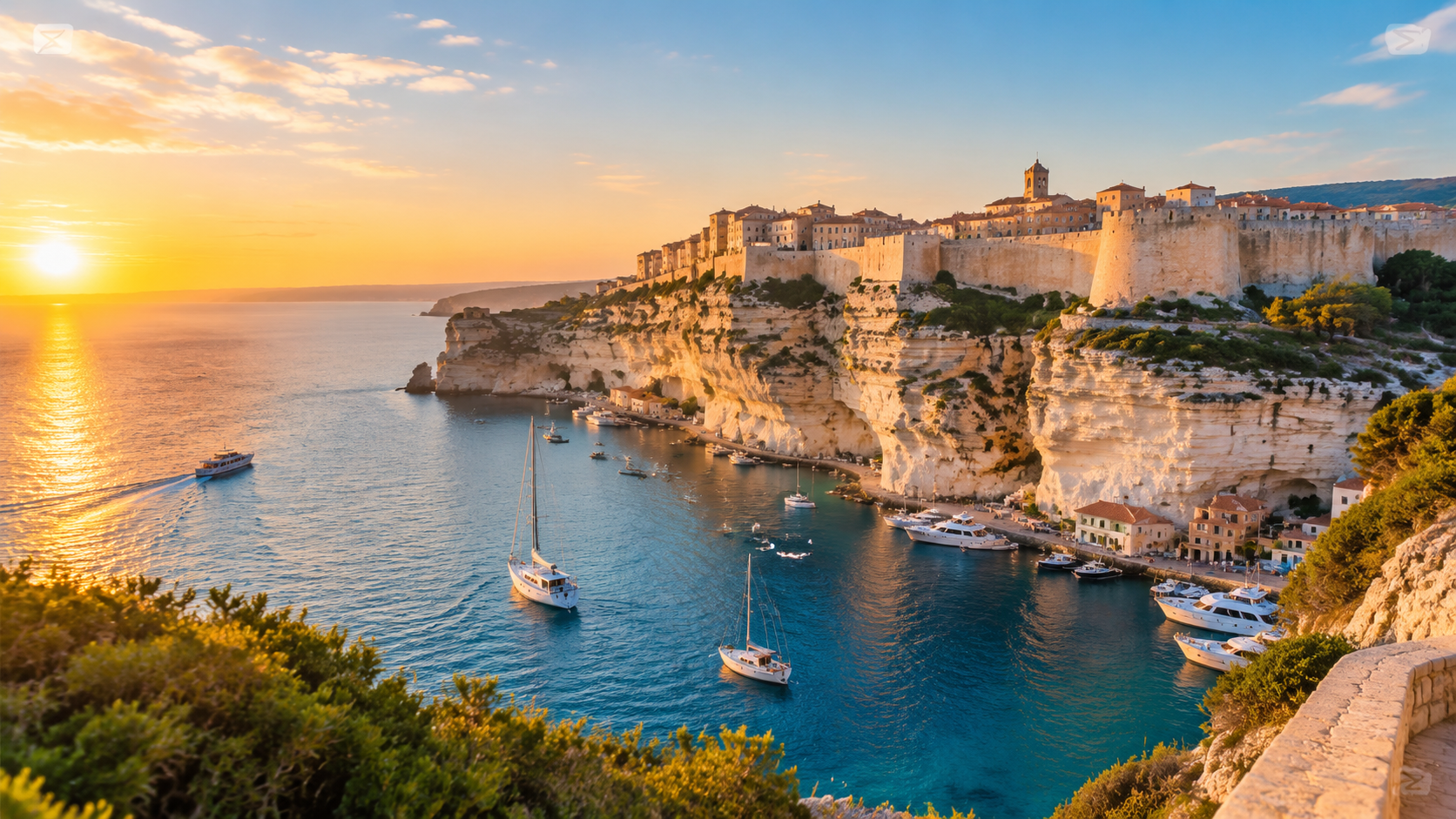
Bonifacio sits 132 kilometers south of Ajaccio, perched atop limestone cliffs that plunge 60 meters into the Mediterranean. The journey takes between two and three hours depending on your transport choice, and the town rewards a full day of exploration with its fortified old town, harbor, and coastal paths.
Quick answer
A day trip from Ajaccio to Bonifacio requires at least nine hours to account for travel time and meaningful exploration. Most visitors depart Ajaccio between 07:00 and 08:00, arrive in Bonifacio by 10:00 or 10:30, spend five to six hours touring the citadel and harbor, then return by evening. The Office de Tourisme opens at 09:00 daily, and the Bastion de l'Étendard charges €3.50 for admission to historic monuments.
Bonifacio receives roughly 200,000 visitors annually, yet 40 percent arrive without a structured plan and lose hours navigating the 189-step climb from the marina to the haute ville. The citadel's medieval streets occupy less than one square kilometer, but the district contains 14 named historical sites, three distinct harbor viewpoints, and a coastal trail that extends four kilometers to the Pertusato lighthouse. Without advance routing, first-time visitors often exhaust themselves on redundant climbs or miss the marine cemetery entirely. The Ajaccio to Bonifacio route offers three transport modes: private car via the N196 and D859, regional bus service operated by Corsica Ferries, or organized coach tours that bundle transport with a guided walk. Private vehicles allow the most flexible timing and enable stops at the Col de Roccapina overlook, where granite formations frame views of the southern coastline. Bus schedules typically offer one morning departure and one late-afternoon return, compressing your window in Bonifacio to five hours. Organized excursions provide bilingual commentary but follow fixed itineraries that prioritize the Escalier du Roi d'Aragon and Bonifacio's upper fortifications, often bypassing the lower town's Genoese quarter. Once in Bonifacio, the logistics shift to vertical navigation. The haute ville sits 60 meters above the port, accessible via the Montée Rastello staircase or the Montée Saint-Roch ramp. Most day-trippers underestimate the exertion required and arrive at the Bastion de l'Étendard overheated and depleted. The Office de Tourisme at 2 Rue du Palais stocks detailed walking maps and operates daily from 09:00 to 19:00; staff confirm real-time conditions for the sentier du littoral, which closes during high winds. The coastal path demands two hours for a round trip to the Grain de Sable rock formation, and the unshaded exposure makes afternoon attempts uncomfortable from June through September. Timing determines whether you experience Bonifacio as a logistical puzzle or a coherent visit. The optimal sequence begins with the upper town's stone lanes while morning light fills the Place d'Armes, descends to the marina for lunch near the Quai Jérôme Comparetti, then reserves the final two hours for harbor exploration or a boat excursion to the Grottes Marines. This rhythm aligns with the town's thermal pattern and ensures you complete the steepest walking before midday heat peaks.
“Without advance routing, first-time visitors often exhaust themselves on redundant climbs or miss the marine cemetery entirely.”
This itinerary suits travelers arriving by morning boat from Ajaccio, with approximately 6–7 hours to explore Bonifacio's fortified upper town, harbor, and coastal landmarks before an evening departure.
Disembark at the marina and climb the Montée Rastello or Montée Saint-Roch—steep stone steps that connect the lower harbor to the clifftop citadel. Budget 15–20 minutes for the ascent.
Wander Rue des Deux Empereurs and Place du Marché, noting the Genoese architecture and narrow limestone passages. Allow 60–90 minutes to visit the Bastion de l'Étendard and walk the rampart viewpoints.
Return to the waterfront for a seated meal at one of the quayside restaurants. Reserve 60–75 minutes to eat without rushing.
Join a short grotto tour departing from the port to view the chalk-white falaises and sea caves from water level. Tours typically run 45–60 minutes.
Walk to the southern tip of the promontory to see the 187-step staircase carved into the cliff face (viewing from the top requires no ticket). Spend 20–30 minutes here.
Visit the clifftop Cimetière Marin for its tiered white chapels and views, then follow the sentier littoral eastward for 30 minutes before looping back to the harbor for your return crossing.
The best arrival window for your day trip is 09:00–10:30. Arriving during this period allows you to navigate the site before mid-day crowds peak and temperatures rise.
Mild, 20°C to 25°C
These shoulder months offer comfortable temperatures and fewer visitors than the peak summer season.
Hot, 27°C to 30°C+
High temperatures and heavy foot traffic make early morning starts essential for a manageable visit.
Cool to mild, 15°C to 20°C
Visitor numbers are lower, providing a quiet experience, though some seasonal services may have reduced hours.
Verdict: For the best experience, plan your visit for Tuesday to Thursday between April and May or September and October, ensuring an arrival between 09:00 and 10:30.
Bonifacio is located on the southern tip of Corsica, accessible from Ajaccio via land routes or maritime transit. Choosing between road travel and boat transport depends on your preference for coastal scenery versus inland travel speed.
T40 coastal route via Sartène
Autocars Mariani or similar regional services from Ajaccio bus station
Maritime transit from Ajaccio harbor
If arriving by car, use the designated visitor parking lots at the entrance of the upper town to avoid navigating narrow historical streets. For maritime arrivals, the port docks directly below the citadel, requiring a walk of 189 steps to reach the old town.
The tourist office and key historic sites in Bonifacio operate on a consistent daily schedule. Please use these hours to coordinate your arrival and departure times for your day trip from Ajaccio.
Exploring the Bonifacio citadel involves significant physical exertion due to the historical topography. Visitors should be aware that the main ascent to the upper town requires navigating 189 steps.
The upper citadel areas remain challenging for wheelchair users due to historic stone paths and stairs.
The primary access from the port to the citadel involves an incline and a count of 189 steps.
There are no public lifts available to bypass the vertical climb to the citadel.
Facilities are located near the port area, though access within the older upper town sections is limited.
Visitors may contact the office at +33495731188 for guidance on avoiding peak crowd periods.
Everything you need to know about day trip from ajaccio to bonifacio
Yes, a day trip from ajaccio to bonifacio is common, though it requires an early start to maximize your time in the city. Most visitors find that arriving in the morning allows enough time to explore the historic citadel before returning in the evening.
For a successful day trip from ajaccio to bonifacio, aim to arrive between 09:00 and 10:30. This window helps you avoid mid-day crowds and the high temperatures often experienced during a walking tour.
Accessing the upper town often involves a climb of 189 steps. Please plan your day trip from ajaccio to bonifacio accordingly if you have mobility concerns or prefer to pace yourself in the summer heat.
Yes, the entrance fee of 3.5 EUR grants access to the Bastion de l'Étendard and includes entry to various historic monuments. This is a standard fee for those exploring the landmarks during their day trip from ajaccio to bonifacio.
It is wise to bring comfortable walking shoes, sunscreen, and plenty of water for your Bonifacio city tour. The limestone cliffs and narrow streets are best explored with sensible gear to navigate the terrain comfortably.
Yes, the site is open daily from 09:00 to 19:00, including Sundays. You can enjoy the cultural attractions throughout the week as part of your planned itinerary.
The Office de Tourisme is located at 2 Rue du Palais, 20169 Bonifacio, France. It serves as a central hub for maps and information upon your arrival in the city.